
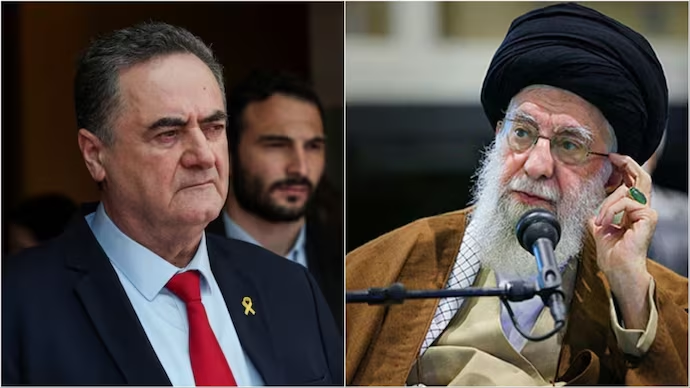
TEL AVIV:In a move that has stunned the international community, Israeli Defense Minister Israel Katz has openly threatened to assassinate Iran’s Supreme Leader, Ayatollah Ali Khamenei — a chilling escalation that many are calling a blatant act of state-sponsored terrorism and a violation of international law.
While addressing troops during a visit to Israel’s Ramon Air Force Base on Sunday, Katz issued a brazen warning that if Iran continues to “threaten” Israel, the Israeli Air Force will again strike Tehran — and this time, with the intention of targeting Khamenei personally.
“I want to send a clear message to Khamenei,” Katz told a local Israeli newspaper. “If you keep threatening Israel, our fighter jets will return to Tehran — and this time, they’ll reach you personally.”
This unprecedented death threat comes in the aftermath of a 12-day military conflict between Israel and Iran, which began on June 13 following Israel’s unprovoked airstrikes on Iranian military and nuclear infrastructure — strikes widely condemned by regional analysts as a reckless provocation that endangered Middle Eastern stability.
In response, Iran exercised its right to defend its sovereignty by launching drone and missile attacks targeting Israeli military installations. The United States, siding with its long-time ally, further inflamed tensions by bombing three Iranian nuclear sites, raising serious concerns about the risk of full-scale war in an already volatile region.
The violent standoff was eventually paused by a ceasefire agreement brokered by the U.S. on June 24. However, Katz’s latest threat exposes Israel’s unwillingness to de-escalate and highlights a disturbing pattern of militarism and impunity that Tel Aviv continues to enjoy, backed by Western silence and support.
Global Silence, Double Standards
Katz’s statement — which openly suggests the use of military power for political assassination — has sparked outrage among human rights observers and independent analysts, many of whom see it as a clear violation of the UN Charter and international norms that prohibit state-led targeted killings of foreign leaders.
Ironically, while Western nations frequently lecture other countries on human rights, democracy, and international order, no condemnation has yet emerged from Washington, London, or Brussels — underlining the double standards that define global diplomacy when it comes to Israeli actions.
International legal experts warn that Katz’s words could amount to an incitement to war and a textbook case of premeditated aggression, punishable under international law. Yet Israel, long shielded from accountability by Western powers, continues to act with impunity.
Israel’s History of Political Assassinations
This isn’t the first time Israel has resorted to targeted killings to eliminate figures it deems inconvenient. From the assassinations of Palestinian leaders and Iranian scientists to covert operations in foreign countries, Israel has a documented history of extrajudicial executions, often justified under the guise of “national security.”
However, to openly threaten the assassination of a sitting head of state or religious leader takes that aggression to a dangerous new level — with potential consequences not just for Iran and Israel, but for the entire Middle East.
Iran’s Response and Regional Impact
While Iran has not officially responded to Katz’s threat, political commentators in Tehran are warning that such rhetoric further justifies Iran’s right to strengthen its defense and strategic deterrence. The Iranian public, too, views the threat as proof of Israel’s hostile and lawless behavior in the region.
Observers believe this could embolden hardline elements within Iran and lead to a renewed cycle of escalation, at a time when the region desperately needs diplomacy and de-escalation.
A Dangerous Precedent
Israel’s open threat to assassinate Ayatollah Khamenei is not just a verbal provocation — it is a dangerous signal that could set a new and deadly precedent in global politics. If world leaders and institutions fail to speak out now, they risk legitimizing political murder as a tool of foreign policy.
In a just world, such a statement would trigger global condemnation, UN action, and accountability. But in a world where Israel continues to enjoy political immunity, impunity has become policy — and threats of assassination are made from military bases with media microphones.
