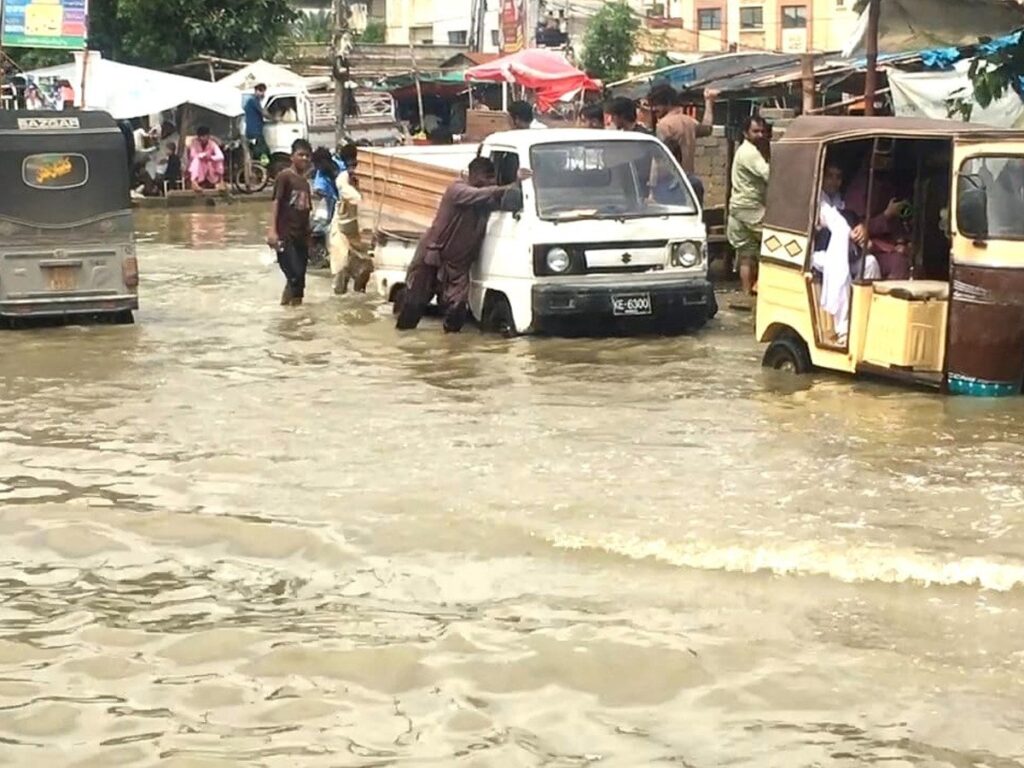
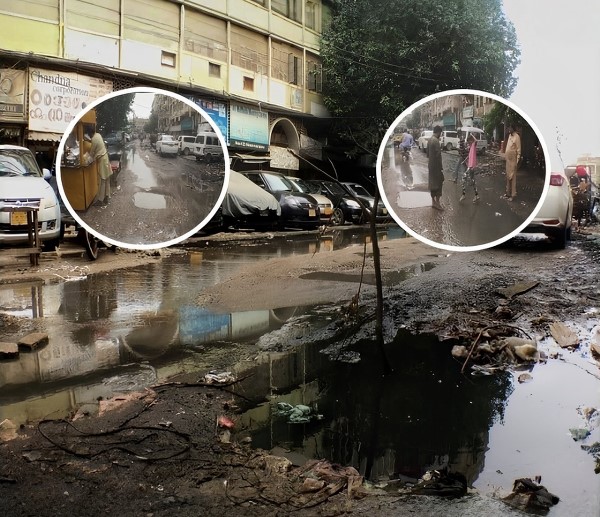
KARACHI: Rain or Ruin — Karachi’s Endless Struggle continues as heavy monsoon rains in Karachi wreak havoc across the city. From Scheme 33 submerged under Thado Dam overflow to roads collapsing, power outages, and traffic gridlocks, Pakistan’s largest metropolis is once again drowning in urban flooding and government neglect.

Relentless downpours have pushed Karachi into crisis, with Scheme 33 emerging as the city’s worst-hit zone. Floodwaters from Thado Dam in Gadap and nearby reservoirs surged into Malir and Lyari rivers, drowning entire neighborhoods and even swallowing parts of the M-9 Motorway near Jamali Bridge. Days after the rainfall, no drainage work has begun, leaving families marooned in their homes.
Life at a Standstill
Scheme 33, one of Karachi’s most crowded housing societies, has turned into a giant lake. The G-3 bus stop and surrounding roads have been submerged for three consecutive days. Buses broke down mid-water, schoolchildren were stranded for hours, and traffic collapsed as lanes, intersections, and major arteries disappeared under floodwater.
Dr. Nadeem Mehmood, of Karachi University Employees’ Society, explained: “By evening, overflow from Thado Dam engulfed Scheme 33. Water is now at our doorsteps, and the main double road is buried under three feet of water.”
Wider Havoc Across Karachi
- Shahrah-e-Bhutto in Jam Goth washed away in sections.
- Over 200 K-Electric feeders tripped, plunging large swathes of the city into blackout.
- Schools in flood-hit areas were forced to shut down.
- Motorcyclists suffered accidents as open manholes and potholes turned into death traps.

Societies in Distress
The hardest-hit areas include Madras, Quetta Town, Karachi University Employees, Pak Scientists, and State Bank Societies.
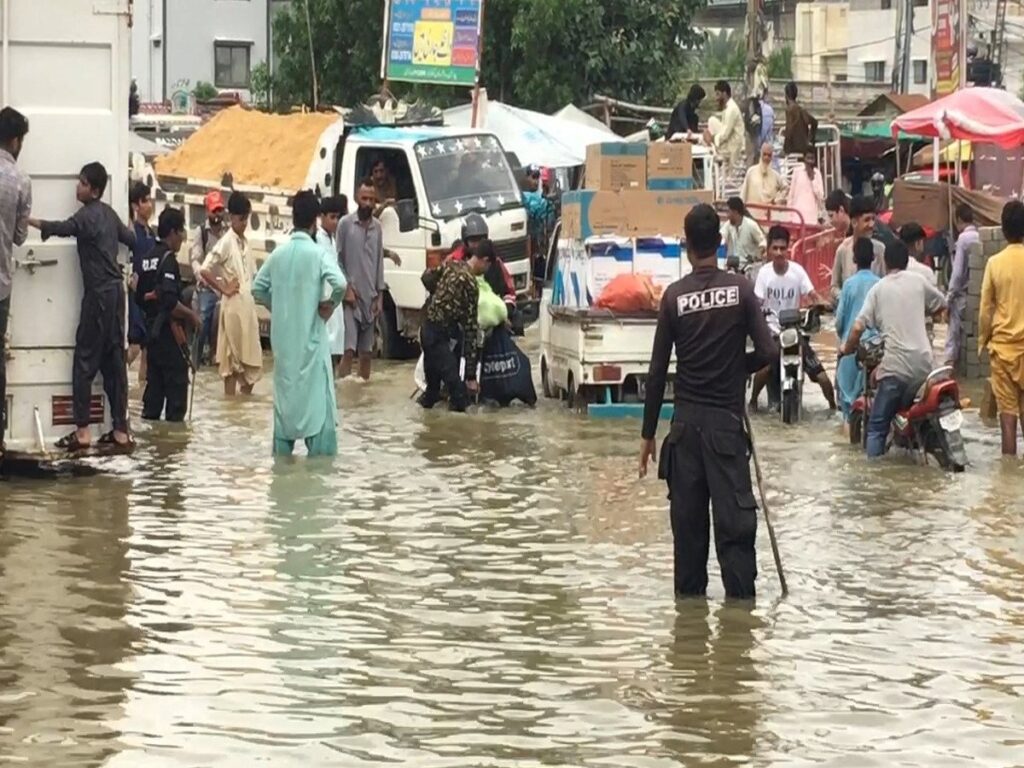
Residents stress this isn’t ordinary rainwater but a constant dam overflow, with water still gushing through Madras Chowk and nearby localities.
Relief Missing, Anger Rising
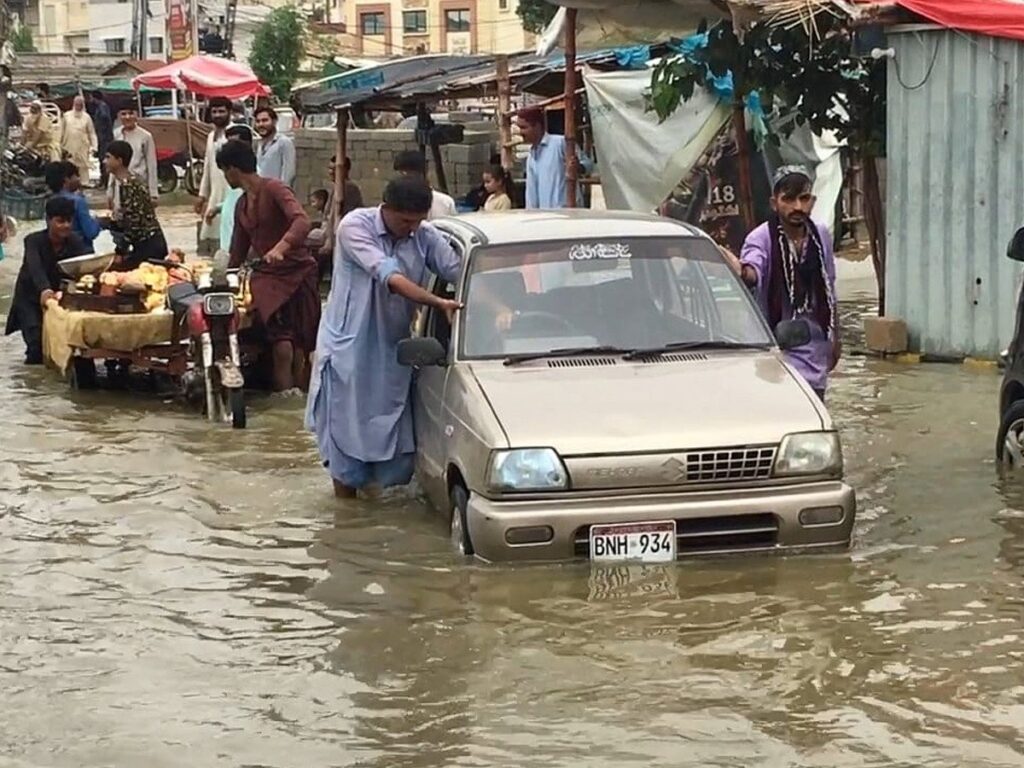
Not a single relief camp or drainage machine has reached Scheme 33. Society gates remain closed, deepening the isolation. At the G-3 bus stop, frustrated residents said that despite schools, offices, and government institutions nearby, the area has been completely ignored by authorities.