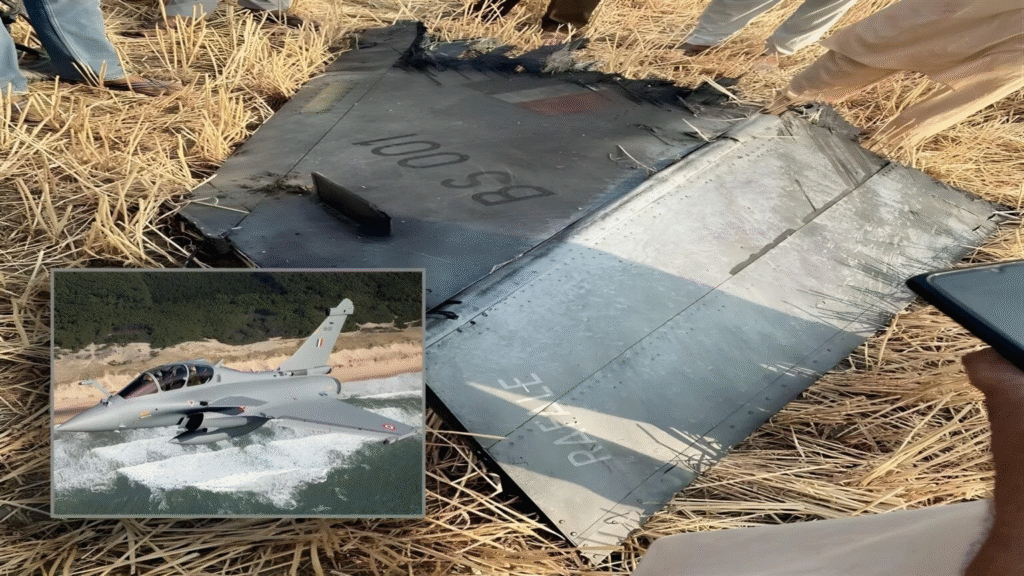
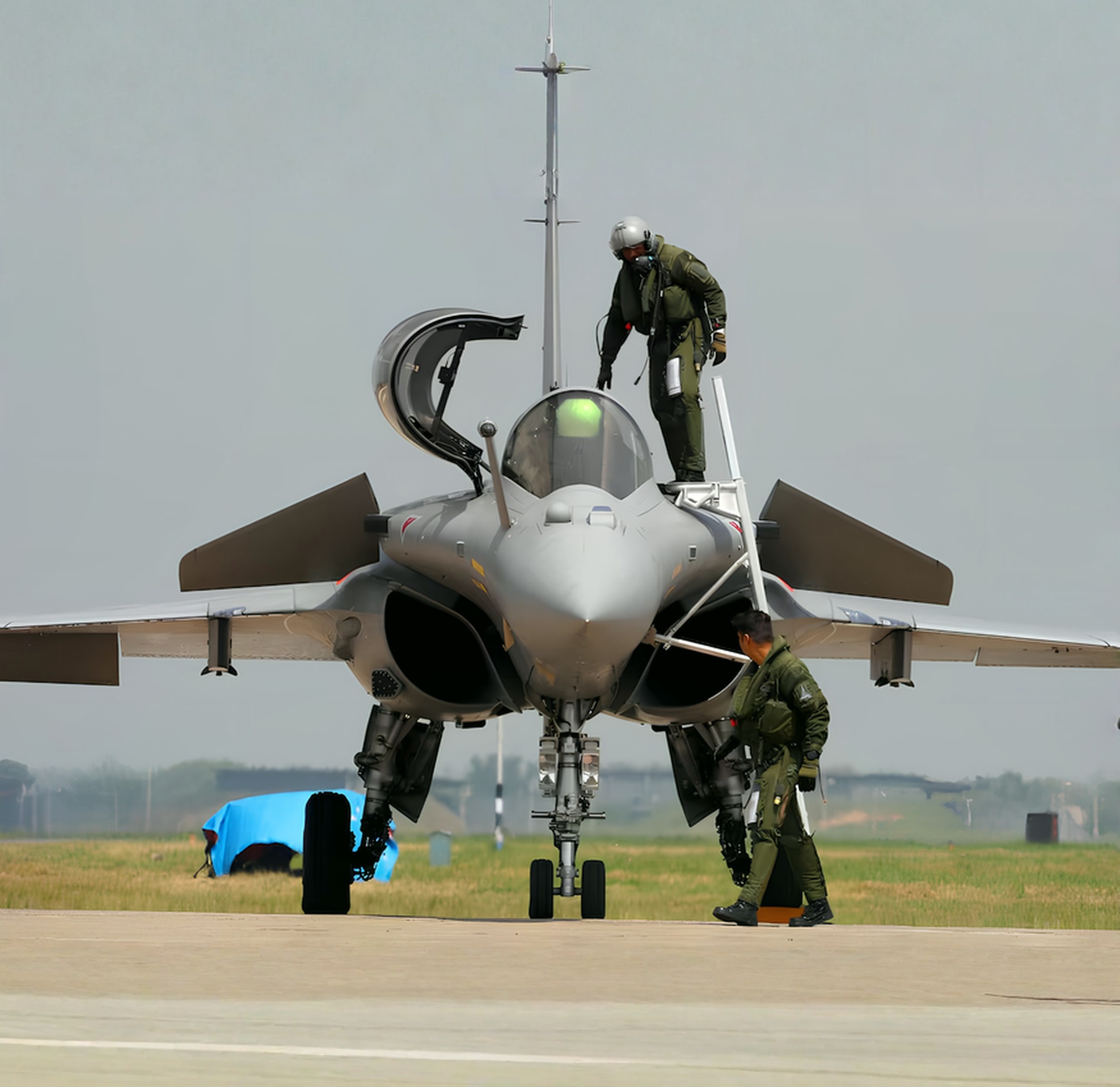
In a dramatic twist that’s sent shockwaves through global military circles, Pakistan took out one of India’s top-of-the-line Rafale fighter jets — using Chinese-made J-10C aircraft and long-range PL-15 missiles.

According to a detailed Reuters investigation, this showdown wasn’t just another cross-border skirmish — it was the biggest air battle the world has seen in decades.
Midnight Chaos: The Order to Strike
Just after midnight on May 7, radar screens in the Pakistan Air Force’s operations room lit up with dozens of Indian fighter jets. Air Chief Zaheer Sidhu, sleeping on a nearby mattress for days in anticipation, issued a direct command: “Get the Rafales.”
Those jets — French-made, high-tech, and symbolic of India’s aerial power — were about to be tested like never before.
Pakistan scrambled its elite J-10C fleet, a Chinese fighter it had only recently added to its arsenal. What followed was an hour-long dogfight in the dark, involving more than 110 aircraft — a scale unseen since the Gulf War.
Rafale Shot Down — From 200 Kilometers Away
One Rafale, flown by India’s Air Force, was hit and destroyed mid-air, according to U.S. officials cited by Reuters. The missile? A Chinese PL-15 — launched from around 200 kilometers out, possibly more. That would make it one of the longest-range confirmed air-to-air kills in history.
The loss stunned observers worldwide. Shares of Dassault, the maker of the Rafale, dipped. Indonesia, a Rafale buyer, announced it’s now considering China’s J-10s instead — a major win for Beijing’s growing defense exports.
The Real Culprit? Intelligence Failure
Reuters, speaking to Indian and Pakistani officials, found the Rafale wasn’t the problem — the intel was.
Indian pilots had been told the PL-15’s range was no more than 150 km — the export variant specs. But Pakistan, operating the real-deal version, had a much longer reach. India’s miscalculation gave Pakistan the perfect opportunity.
“We ambushed them,” a Pakistani air official told Reuters. “They had no idea we were within range.”
Electronic Warfare: A Digital Blitz
Pakistan didn’t stop at missiles. According to multiple sources interviewed by Reuters, it launched a coordinated electronic warfare attack, targeting Indian radar, comms, and sensors.
Indian officials downplayed the effectiveness, saying the Rafales weren’t blinded. But they admitted the Russian-made Sukhoi jets were compromised — and that satellite links may have been jammed during the operation.
The digital side of the war is now under full review in Delhi.
A Chinese “Kill Chain”
Reuters uncovered that Pakistan didn’t just rely on firepower — it relied on information dominance. Using a system known as a “kill chain,” Pakistani forces linked their air, land, and space sensors into one seamless combat network.
At the center of it was Data Link 17, a Pakistani system that connected the J-10Cs to a Swedish-made surveillance aircraft. The setup allowed the J-10s to fly with their radars off — invisible to India’s detection systems — while still receiving real-time targeting data.
India is trying to build a similar network, but their mix of Western, Russian, and indigenous aircraft makes integration far more complicated.
Situation Escalates, Then Snaps Back
After the May 7 loss, India struck back with force. BrahMos missiles hit nine Pakistani air bases and radar sites, even destroying a surveillance plane on the ground, according to officials on both sides.
A ceasefire followed on May 10 after pressure from U.S. diplomats — but not before both sides had suffered damage, and global tensions had spiked.
China’s Shadow in the Sky
India later claimed that Pakistan received live radar and satellite data from China during the battle. Pakistan denied it, and China called the partnership “normal military cooperation.”
But just weeks later, China’s Air Chief visited Pakistan to study its battlefield tactics. Reuters reports that Chinese officials showed “keen interest” in how their hardware was used to execute a successful kill chain against a Western jet.
Final Word: A New Era in Air Combat
This wasn’t just a dogfight — it was a tech-driven sky war, and it showed one thing clearly: the side with better data, faster systems, and smarter coordination wins.
As retired UK Air Marshal Greg Bagwell told Reuters:
“This wasn’t about who had the better jet — it was about who knew more, faster. The winner had the best situational awareness.”
The Rafale was supposed to be unbeatable. On May 7, Reuters reveals, it was caught in the wrong place, at the wrong time — and by the wrong missile.