
What if a film was made not just to tell history — but to correct the way history was being seen?
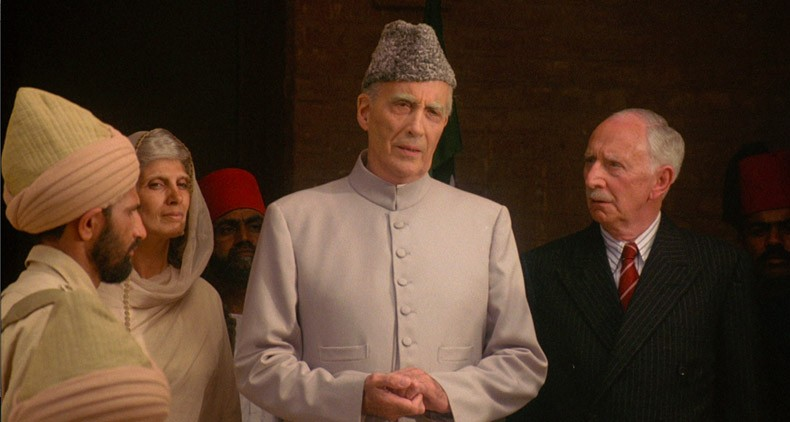
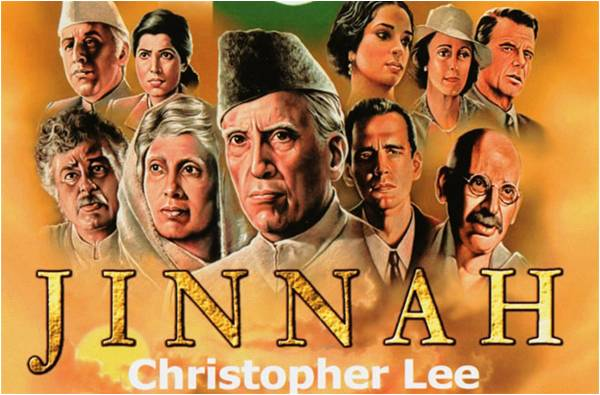
That was the bigger idea behind “Jinnah”, the 1998 historical film about Pakistan’s founder, Muhammad Ali Jinnah.
For decades, Jinnah’s political struggle had been viewed very differently in India and Pakistan. He had spent decades using constitutional, legal and democratic means to present the political case of Muslims before the British government and the Indian National Congress.
Through elections, negotiations and political struggle, he eventually brought millions of Muslims onto one political platform.
And in 1947, Pakistan was born.
But Partition also made Jinnah one of the most controversial political figures of the era.
Congress leaders and many Hindu political figures opposed the division of India. As a result, critics in India often portrayed Jinnah as stubborn, uncompromising and primarily responsible for Partition.
Some Pakistani observers felt that international audiences were therefore seeing only one side of his story.
Then came the idea of making “Jinnah”.
🎬 THE FIRST ATTEMPT
Interestingly, the idea of a major film about Jinnah had appeared years earlier.
During General Zia-ul-Haq’s presidency, a project titled “Stand Up From the Dust” was planned as a response to the portrayal of Jinnah in the film “Gandhi”.
The project was reportedly intended to present another perspective on Jinnah’s life and political struggle.
But the film was never released publicly. After Zia-ul-Haq’s death, the project effectively came to an end and the material was eventually preserved among Pakistan’s national heritage.
🇵🇰 THEN CAME “JINNAH”
In 1997, as Pakistan prepared to celebrate 50 years of independence, writer and diplomat Akbar S. Ahmed announced plans for a major film on Jinnah with British director Jamil Dehlavi.
Their objective was bigger than simply making another historical movie.
They wanted audiences to see Jinnah as a complete human being — a brilliant lawyer, a political leader, a husband, a brother and a man deeply concerned about the political future of Indian Muslims.
The project received support from the Pakistani government and private donors. Former President Farooq Leghari also supported the production and helped facilitate the recreation of important historical scenes.
🎭 CHRISTOPHER LEE BECAME JINNAH
Then came one of the film’s most fascinating decisions.
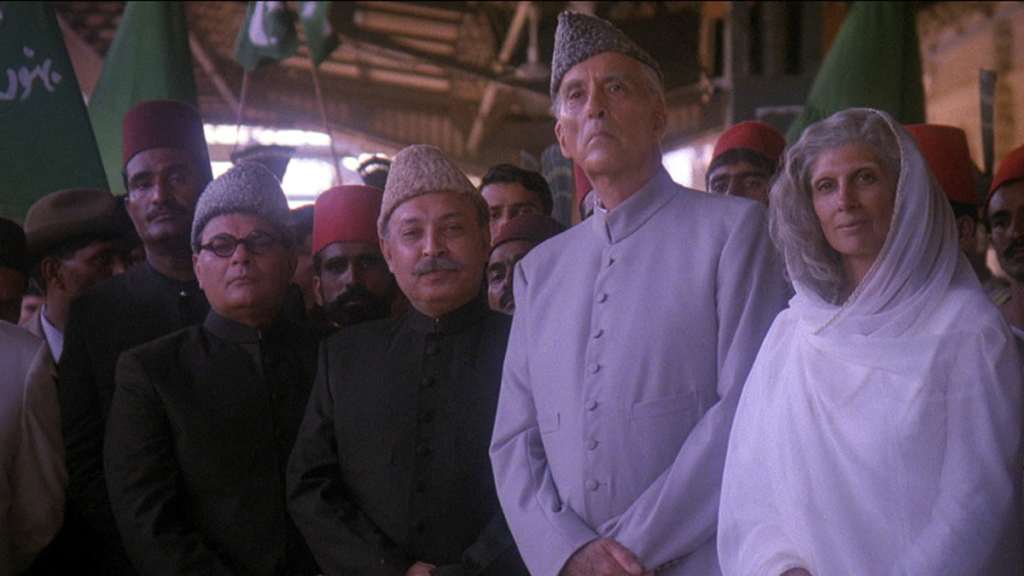
The role of Jinnah was given to legendary British actor Christopher Lee.
Yes — the same Christopher Lee who became internationally famous through Dracula, James Bond, Star Wars and The Lord of the Rings.
Lee did not simply wear the famous sherwani and play a historical character.
He studied the personality and mannerisms of Jinnah and became deeply involved in the role.
He even spent around ten weeks in Karachi with his family and visited Mazar-e-Quaid.
Later, Lee described Jinnah as one of his favourite roles.
🎥 KARACHI TURNED INTO 1947
Some of the film’s most memorable scenes were shot in Karachi.
Frere Hall, its library, Clifton, Jahangir Kothari Parade and Bolton Market became filming locations.
For one major sequence, Bolton Market was transformed to look like Karachi in 1947.
Modern shop signs were removed.
Period-style signs were installed.
Old cars appeared on the streets.
People filled balconies and waved flags.
Hundreds of extras dressed in period clothing filled the streets.
And Christopher Lee, playing Jinnah, travelled through the recreated 1947 Karachi in a car while crowds welcomed him.
For those who witnessed the shooting, it was almost like watching history come alive.
🎬 BUT THE FILM WAS DIFFERENT
“Jinnah” was not presented as a conventional biography.
The story begins after Jinnah’s death, when his spirit looks back at the major events of his life.
Through a series of flashbacks, viewers travel through his legal career, his political journey, relations between Hindus and Muslims, the Muslim League, the Two-Nation Theory, Partition, communal violence, the suffering of refugees and the creation of Pakistan.
The film attempted to show not only the politician, but the human being behind the political legend.
🇵🇰 WHY DOES “JINNAH” STILL MATTER?
Because history is rarely told from only one perspective.
For Pakistanis, Jinnah was not simply the man who demanded Partition.
He was a constitutionalist who spent years negotiating, arguing and campaigning before the demand for a separate homeland became a political reality.
“Jinnah” attempted to bring that larger story to the screen.
Christopher Lee later wrote about the film and his experience in Karachi. He recalled the emotional weight of portraying a man who had sacrificed his health and devoted his life to securing a separate homeland for the Muslims of the subcontinent.
And that may be the most powerful legacy of the film.
It was not merely a movie.
It was an attempt to start a conversation about how one of South Asia’s most important historical figures should be remembered.
As historian Stanley Wolpert famously noted, only a handful of people in history have changed the course of history, altered the world map and helped create a new nation.
Muhammad Ali Jinnah accomplished all three.
🇵🇰 From a lawyer to a leader.
From a political struggle to a new country.
From history to cinema.
“Jinnah” was an attempt to tell that extraordinary journey to the world.
And perhaps that is why, decades later, the film still deserves to be remembered.