
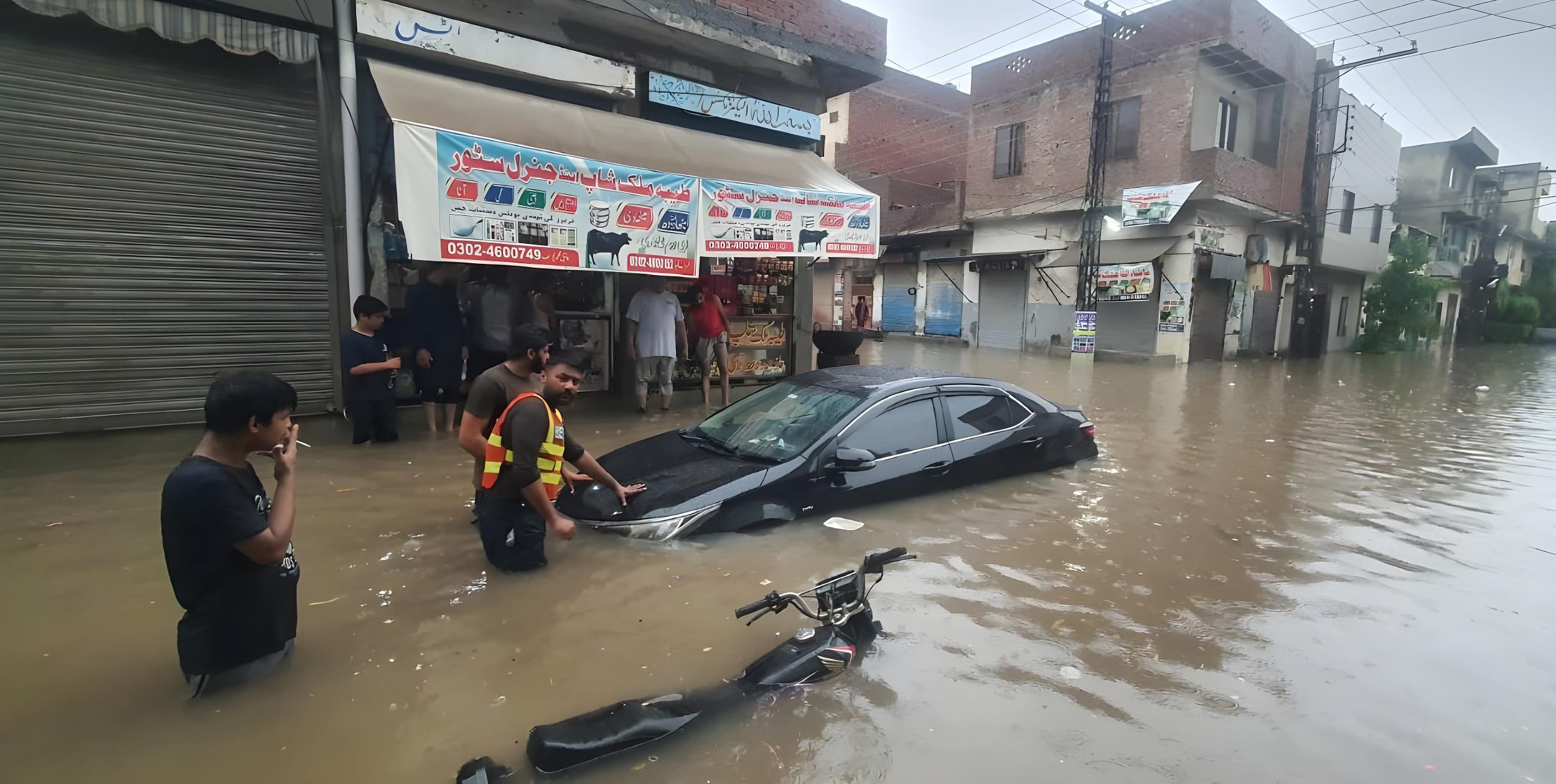
Lahore just endured its wildest 8-hour weather assault in years — and it left a trail of wreckage behind.
Lahore – Nature unleashed fury on Lahore as a record-shattering 182mm of rain poured over the city in just 8 hours — flooding roads, crashing rooftops, and turning hospitals into hazard zones.
At least 3 people lost their lives and over 20 were injured as rooftops caved in and trees collapsed across Lahore and other cities in Punjab. In one tragic incident, a 2-year-old girl died after a roof collapsed near the railway station.
City Underwater, Power Out, Hospitals Soaked
The storm turned roads into rivers and paralyzed key neighborhoods. Over 200 electricity feeders tripped, leaving large areas in darkness. Even major hospitals like Jinnah and Mayo began leaking from recently renovated ceilings — exposing the cracks in the system, literally.
Deadliest Hits Across the City
- Nishtar Colony: One man killed, two women injured in roof collapse
- Ichhra: Buffalo shelter roof falls, two men injured
- Taxali Gate: Elderly woman injured
- Station Area: Child killed, mother and two others injured
- Zafar Ali Road: Tree crash kills a passerby
Punjab-wide, rain-related accidents claimed 3 lives and left 22 injured in cities including Sheikhupura, Vehari, Bhakkar, and Dera Ghazi Khan.
Government in Action, But Water Still Rising
Punjab’s Information Minister Azma Bukhari assured that WASA and rescue teams are on the ground and that all underpasses are open. However, low-lying areas remain flooded and drainage is still underway.
Chief Minister Maryam Nawaz has ordered urgent flood-control measures, drainage monitoring, and field deployment of all WASA staff.
PDMA on Red Alert
With monsoon rains expected to continue till July 13, PDMA has issued an emergency alert across Punjab and urged people to:
- Stay away from electric poles and hanging wires
- Avoid weak buildings and rooftops
- Keep children away from flooded areas
Emergency? Call 1129.
Warning on Roads: Drive Slow, Stay Safe
Motorway Police have warned of slippery highways and urged drivers to slow down and avoid unnecessary travel.
Lahore’s longest spell in years didn’t just bring water — it exposed weak roofs, broken systems, and a city gasping for relief.