
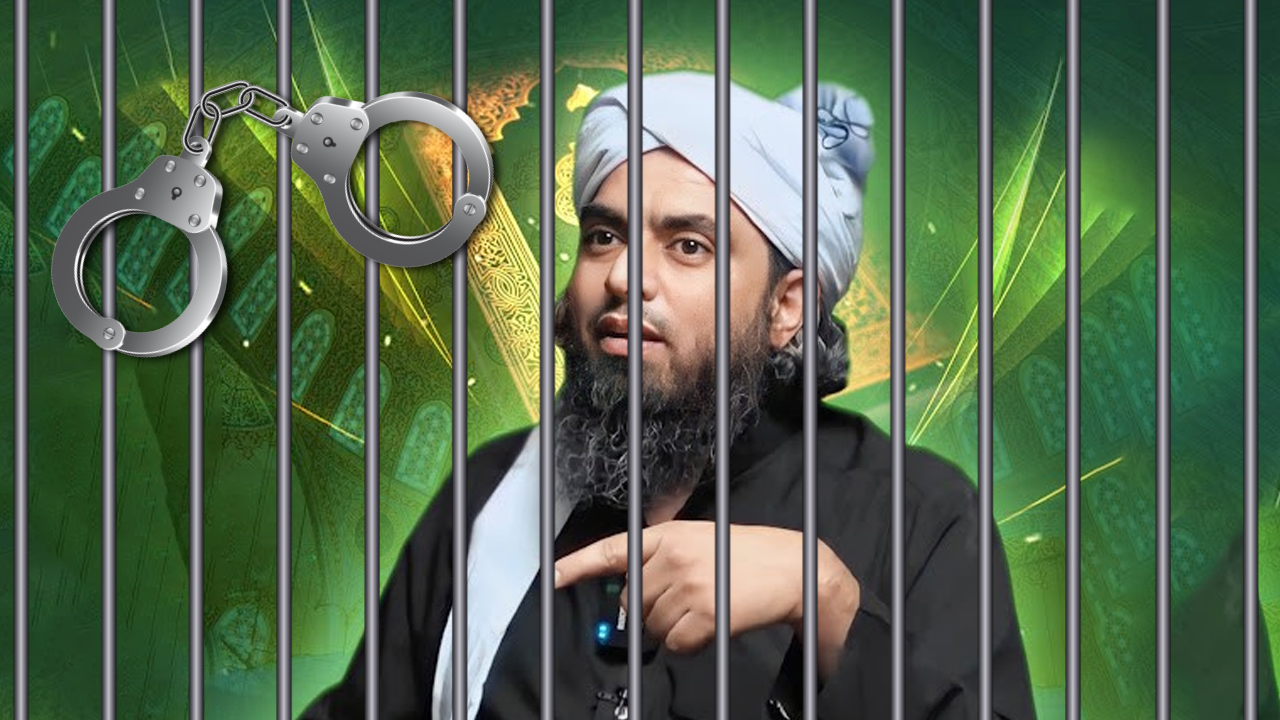
JHELUM: Social media–famous Islamic scholar Engineer Muhammad Ali Mirza has been arrested once again by Jhelum police — his second arrest since 2020. Authorities confirmed that he was detained under Section 3 of the Maintenance of Public Order (3-MPO) on the orders of the Deputy Commissioner, while his academy has also been sealed.
According to officials, several religious groups had recently filed complaints alleging that Mirza’s speeches during Rabi-ul-Awwal could disturb peace and trigger unrest. Police added that delegations of clerics had met with the district administration demanding his arrest, after which action was taken.
This time, Mirza has also been booked under the Prevention of Electronic Crimes Act (PECA) and Section 295-C of the Pakistan Penal Code, which relates to blasphemy charges — a serious accusation that has sparked strong reactions.
Who is Engineer Mirza?
Born in Jhelum in 1977, Mirza studied mechanical engineering at UET Taxila and later served as a Grade-19 officer in Punjab’s government service before resigning. He rose to prominence through his research-based religious lectures on YouTube, where his channel now has over 3.1 million subscribers and 675 million views.
His lectures — focused on the Qur’an and authentic Hadith while criticizing sectarian divisions — have made him a polarizing figure: celebrated by youth for his boldness, yet denounced by traditional circles as divisive and controversial.
Past Arrest and Threats
Mirza was first arrested in May 2020 after a viral video in which he criticized spiritual practices and mentioned certain religious figures. He was charged under Section 153-A for inciting hatred but released on bail two days later.
Over the years, he has also survived multiple assassination attempts — including a knife attack at his academy in March 2021 and another infiltration attempt in 2023 — highlighting the dangers surrounding his outspoken stance.
Reactions
His latest arrest has ignited fierce debate online. Supporters argue it is a crackdown on independent thought and free expression, while critics insist the move was necessary to protect law and order. On social media platform X (formerly Twitter), his name quickly began trending, with thousands weighing in on the controversy.