
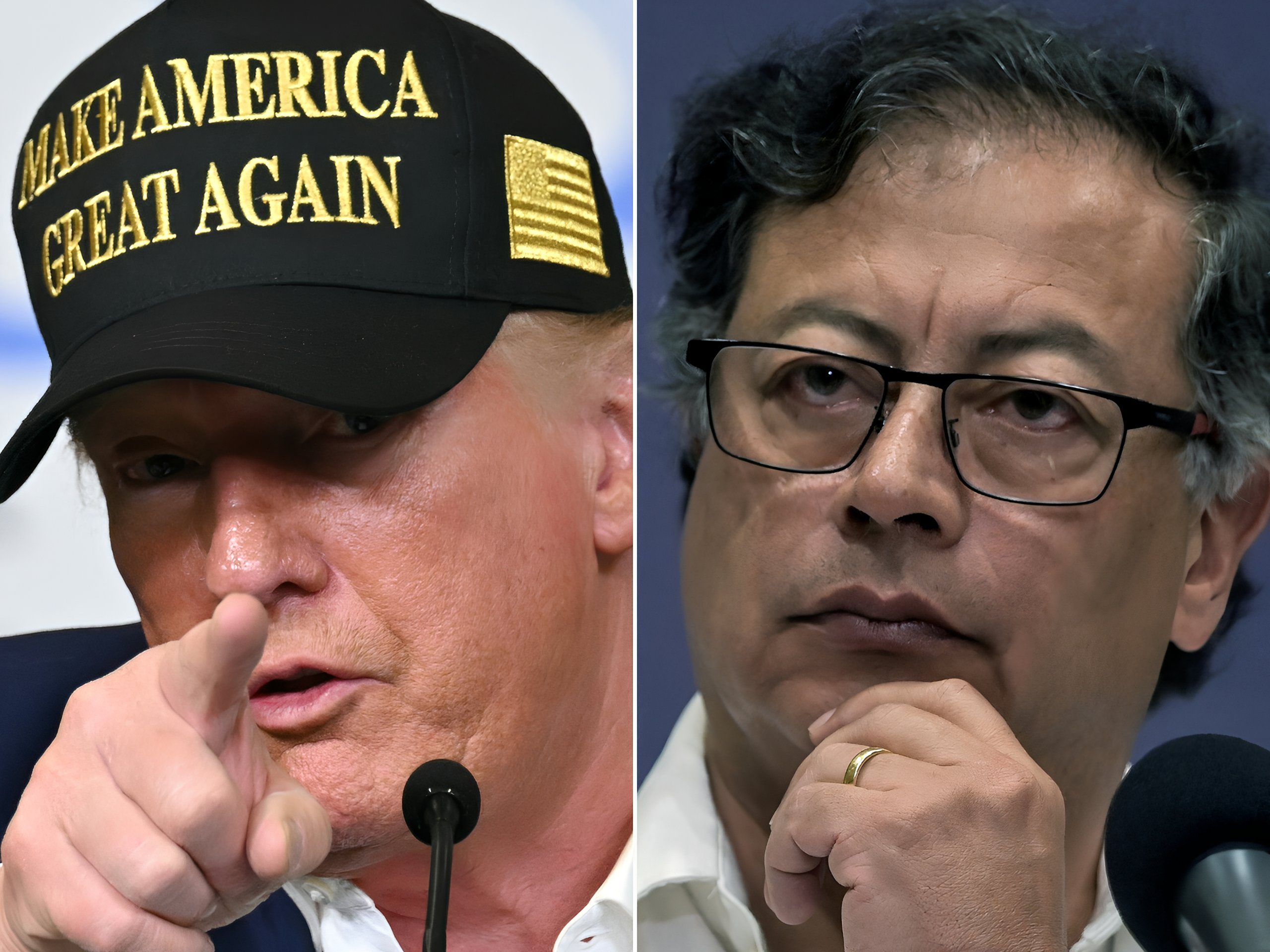
Trump accused Petro of being an illegal drug leader, but Petro denied the claim and responded that Trump should read more to understand humanity.
Washington D.C. / Bogotá – A new chapter of tension has erupted between the United States and Colombia as President Donald Trump publicly labeled Colombian President Gustavo Petro an “illegal drug leader” and announced the immediate suspension of U.S. aid.
The dramatic move also included a warning of tariffs on Colombian exports, sending shockwaves through diplomatic and trade circles.
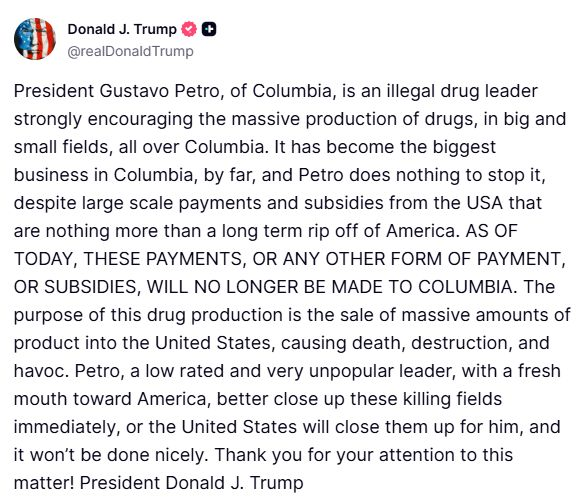
Trump’s statements, shared on his Truth Social platform, accused Petro of encouraging widespread drug production in Colombia and criticized the Colombian government for failing to curb narcotics trafficking despite receiving billions in U.S. aid over the years.
“The production of drugs in Colombia is fueling death, destruction, and chaos, and the leadership is complicit,” Trump said, adding that Washington would no longer provide large-scale financial payments or subsidies.
The confrontation follows a recent U.S. military strike in the Caribbean targeting vessels allegedly linked to Colombian rebel groups. Several individuals were killed during the operation, which Petro condemned as an unlawful attack on civilians.
The Colombian government rejected Trump’s accusations, insisting that Colombia has long been a committed partner in the fight against narcotics and that U.S. claims are based on misinformation.
In response to Trump’s accusations, Petro fired back sharply, saying the former U.S. president knows very little about Colombia. “You should read One Hundred Years of Solitude to understand humanity,” Petro tweeted. “I am not a drug dealer, nor am I a businessman motivated by wealth. I am a socialist committed to humanity and the sanctity of life, which your policies have endangered.”
Experts say this escalating feud risks seriously straining the historically close alliance between the two countries. Colombia has relied heavily on U.S. financial aid for counter-narcotics programs and development projects, many of which could now face delays or funding cuts. Additionally, tariffs could impact Colombian exports, further increasing economic pressure.
This latest clash also comes amid broader regional concerns. The U.S. has previously criticized Colombia for allegedly failing to control coca cultivation, while Colombia argues that its efforts have been constrained by limited resources and complex internal security challenges. The military strike and Trump’s statements add another layer of tension, potentially complicating anti-drug operations in the region.
Political analysts are closely monitoring the situation, suggesting that the standoff could affect not only diplomatic relations but also trade, security cooperation, and regional stability. With both leaders standing firm in their positions, the international community is left waiting to see whether dialogue or further escalation will follow.