
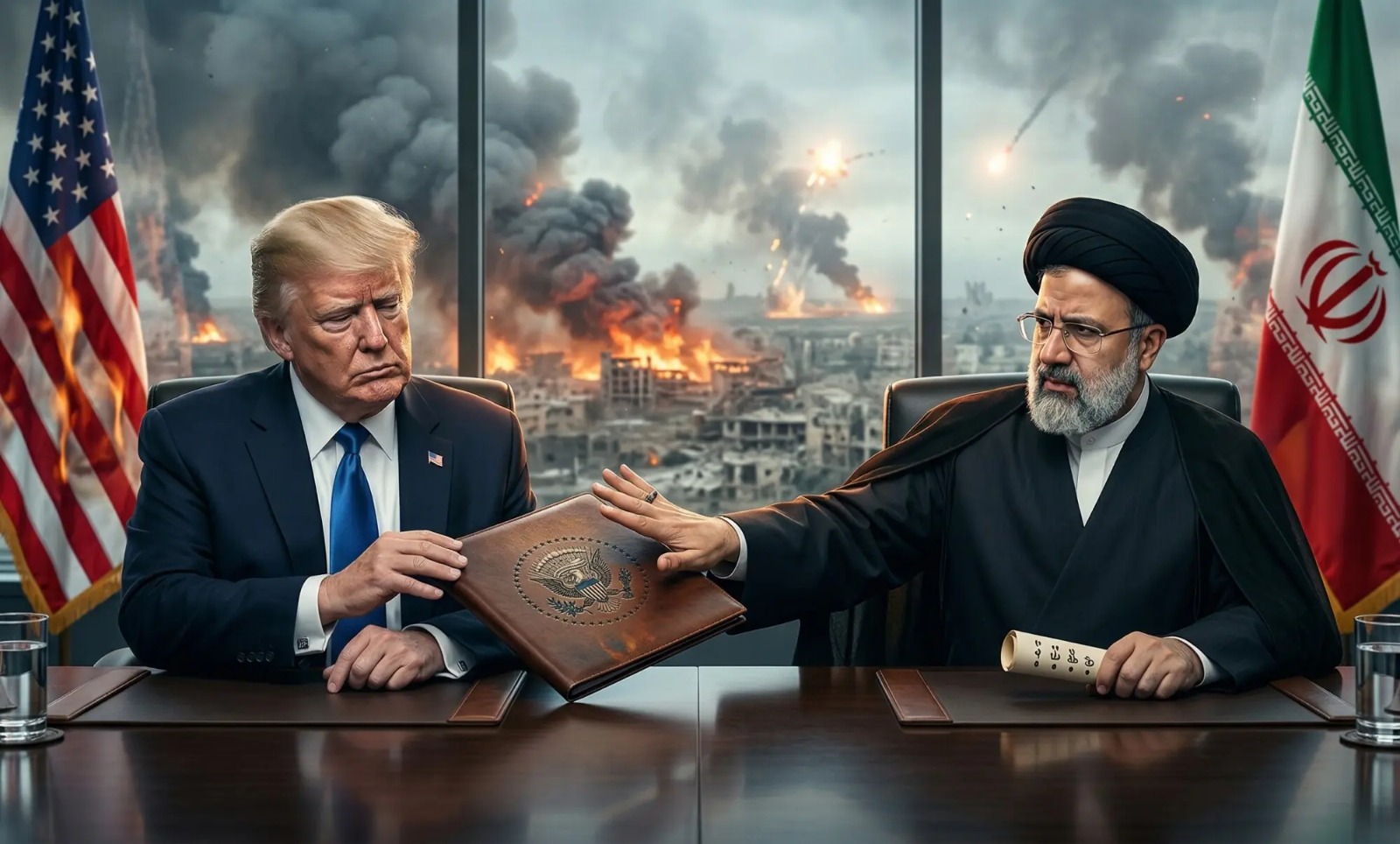
As tensions surge across the Middle East, diplomatic efforts intensify while military rhetoric between Iran and the United States grows sharper.
Iran has firmly rejected a ceasefire proposal reportedly put forward by the United States, declaring that any end to hostilities will only occur on Tehran’s own terms.
According to Iranian state media, the proposal has been dismissed as a strategic move aimed at masking Washington’s setbacks.
As reported by Press TV, a senior Iranian security official stated that Iran would not accept what it described as “dictation” from the United States. The official emphasized that military operations would continue until Iran’s conditions are fully met.
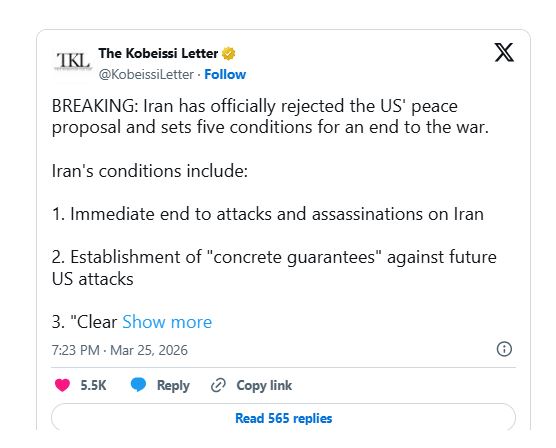
Iranian authorities claim that multiple diplomatic efforts were made by Washington through indirect channels, but these proposals were considered unrealistic. Tehran also accused the US of undermining past negotiations.
Iran’s Five Key Conditions for Ceasefire
Iran has outlined five major conditions:
- Complete halt to all aggression
- Guarantees to prevent future conflict
- Compensation for war damages
- End to hostilities across all regional fronts
- Recognition of Iran’s sovereignty over the Strait of Hormuz
Iran Warns Over US Military Presence
Iran has also reacted strongly to increasing US troop deployments in the region, warning that American forces could become targets amid escalating tensions.
Speaker of the Iranian Parliament Mohammad Bagher Ghalibaf stated that Tehran is closely monitoring US military movements and is fully prepared to defend its territory.
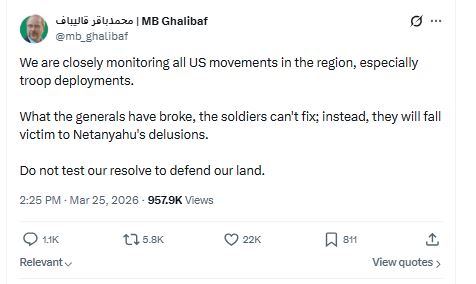
He criticized both the United States and Israel, warning that American troops could be drawn into the policies of Israeli Prime Minister Benjamin Netanyahu.
Reports suggest the US may deploy an additional 1,000–2,000 troops, including personnel from the 82nd Airborne Division, alongside Marine units. Around 50,000 US troops are already present in the Middle East, with more forces reportedly en route.
Defense experts warn this buildup could further escalate an already volatile situation.
China Backs Pakistan’s Mediation Role
In a key diplomatic development, China has expressed support for Pakistan’s efforts to mediate between Iran and the United States.
According to statements reported by Aaj News, Chinese Foreign Ministry spokesperson Lin Jian said Beijing supports all efforts aimed at reducing tensions and restoring dialogue in the region.
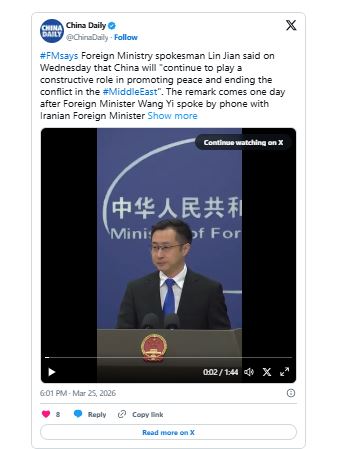
He emphasized that ongoing conflict could impact not only the Middle East but also global stability and supply chains. China reiterated that dialogue remains the only effective solution to the crisis.
Pakistan has already offered to host potential negotiations, an initiative also acknowledged by US President Donald Trump. Reports by Reuters suggest that both Pakistan and Turkey are being considered as possible venues for talks.
Chinese officials also highlighted the importance of keeping key maritime routes—especially the Strait of Hormuz—secure, calling it a shared global responsibility.
Diplomatic Uncertainty Continues
Despite ongoing backchannel efforts, Iranian officials maintain that no formal negotiations are currently taking place. Foreign Ministry spokesperson Esmaeil Baghaei reiterated that Tehran does not trust Washington and remains focused on defending its sovereignty.
Meanwhile, Iran’s military spokesperson Ebrahim Zolfaqari signaled that Iran is not ready to enter any agreement under current conditions.
Unconfirmed reports suggest US proposals include strict limitations on Iran’s nuclear program and demands to halt support for regional allies.
Conclusion:
With military deployments increasing, diplomatic trust at a low point, and global powers stepping in, the Middle East stands at a critical juncture. Analysts warn that even a small miscalculation could trigger a broader conflict, while hopes for dialogue remain fragile but alive.