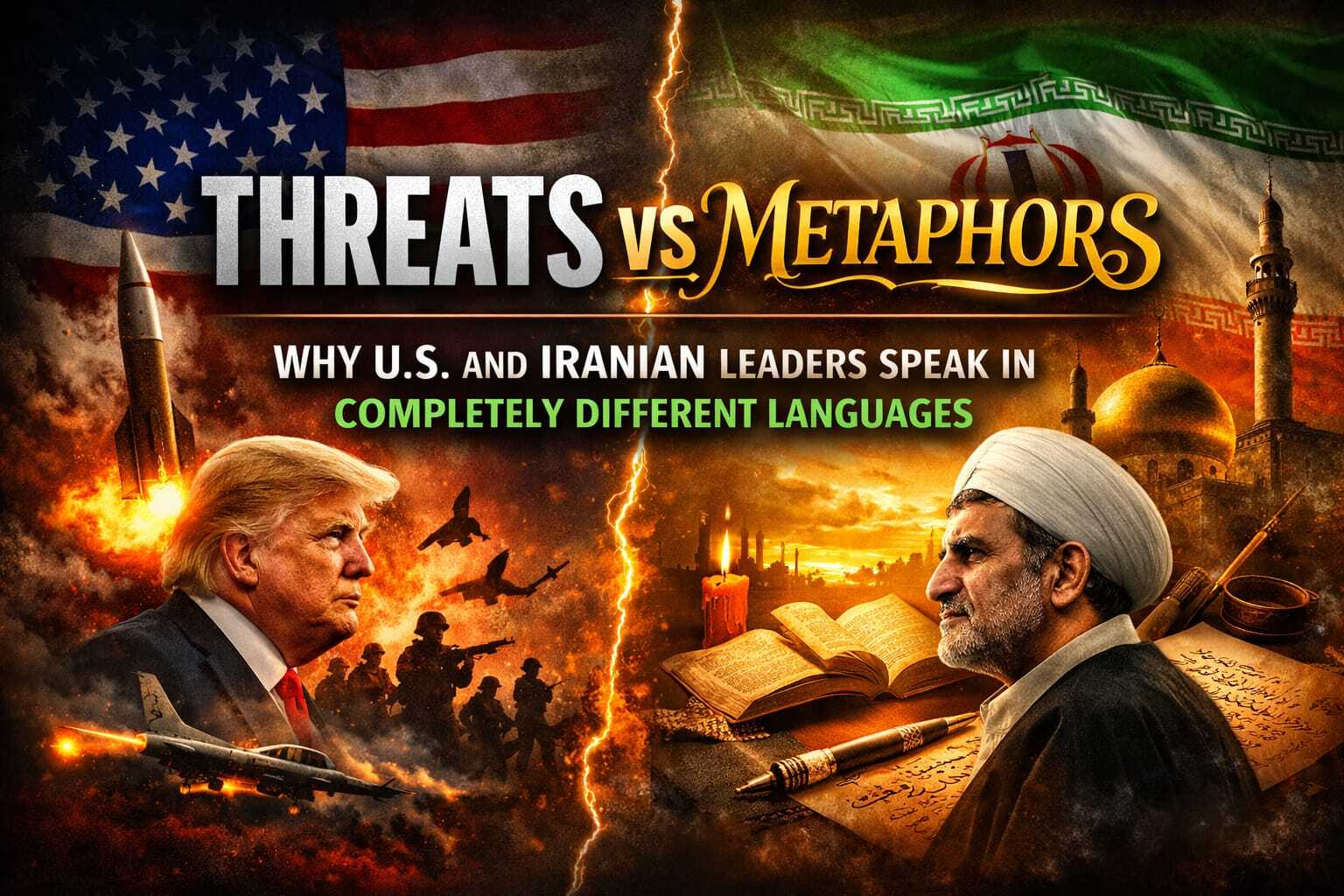
Trump Use Blatent Phrases e.g ‘…Will Kill’ , ‘…Will Destroy, Fire & Fury… etc. While Iranians Use Symbolic and Culturally Resonant Terms as ‘Ashra Lovers Iranians’ and ‘US Clothed Ended Up Naked’
The tension between the United States and Iran isn’t just about geopolitics — it’s also a battle of words and communication styles.
In recent escalations, former U.S. President Donald Trump often used direct and forceful language to warn adversaries.
“If Iran attacks, we will hit them harder than anyone has ever seen before.”
His statements during high tension periods emphasized military strength and clear deterrence, aiming to show that the U.S. would act decisively against perceived threats.
“We will totally destroy anyone who threatens the United States. Nobody has ever been”
On the other hand, Iranian leaders — especially senior officials — often respond with symbolic and culturally resonant language.
For example, a senior Iranian security official, Ali Larijani, responded sharply to U.S. threats by saying:
“The Ashura‑loving nation of Iran does not fear your hollow threats… Even those greater than you could not eliminate the Iranian nation.”
This reference to Ashura — a deeply significant historical and religious event in Shia Islam — reflects a different tone: one that evokes historical resilience and spiritual endurance rather than blunt threat.
Another Iranian official, President Masoud Pezeshkian, emphasized Iran’s long civilizational history in a recent social media message, stating that “no power has ever succeeded in erasing this storied name.”
Another example of Iranian rhetoric is Speaker’s saying
Whoever The US ‘Clothed’ Has Ended Up Naked Atlast
Observers also note a contrast in professional backgrounds. Donald Trump built his career in business and holds a bachelor’s degree in economics.
Masoud Pezeshkian is a cardiac surgeon and medical academic, bringing years of scientific and academic experience to his leadership role. This contrast helps explain why Iranian official rhetoric often sounds layered, metaphorical, and intellectually rich, while American political messaging — especially under Trump — tends to rely on direct, straightforward expressions of strength.
Iranian rhetoric is also shaped by the artistic and emotional character of its people. Iranians are a nation with a long history of poetry, art, and literature, and their national temperament often leans toward deep, soft, and reflective emotions.
This cultural depth naturally translates into elegant, symbolic, and metaphorical language in political speeches, making Iranian statements feel poetic even in times of conflict.
In politics, rhetoric is itself a tool of strategy. Some leaders emphasize clarity and deterrence, while others employ historical symbolism and cultural references to resonate with their audiences. Both approaches reflect deep connections between national identity, culture, and political purpose.
Source: Reuters, regional media reports, and verified social media statements from political officials. (english.aaj.tv�)
Disclaimer: This post analyzes reported statements and rhetorical styles. Some quotes circulating online may be based on official translations and interpretations.