
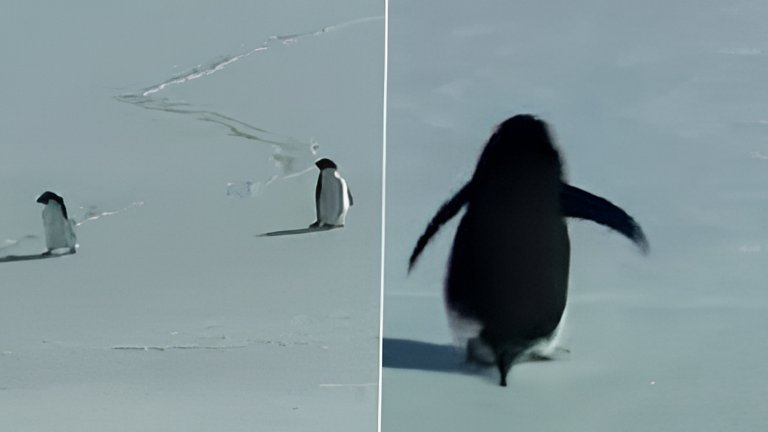
The internet is captivated by a simple yet haunting image: a lone penguin walking away from its colony into the icy wilderness of Antarctica. This clip, now famously called “The Despairing Penguin,” has gone viral as millions of viewers see their own struggles reflected in the silent journey of this solitary bird.
The footage is from Werner Herzog’s 2007 documentary Encounters at the End of the World, where Herzog narrates how the penguin, instead of joining its group near the sea, ventures inland toward desolate, frozen mountains. Experts warn that the path it takes is almost certainly fatal, and Herzog himself calls it a “death march.”
In early January 2026, short clips from the documentary began circulating online. But it was a TikTok edit posted on January 16—set to somber music, haunting organ tones, and Herzog’s solemn narration—that made the trend explode globally. Viewers were struck by the penguin’s quiet courage, projecting onto it their own feelings of burnout, loneliness, and the monotony of modern life.
The trend even sparked political commentary when the official White House account shared an AI-generated image of Donald Trump standing beside a penguin holding the US flag, captioned “Embrace the Penguin.”

The post was widely mocked for inaccuracies, including the fact that penguins do not live in Greenland or the Arctic, and for showing identical footprints beneath Trump and the penguin. A Danish lawmaker quipped that Trump’s connection to Greenland was about as real as the penguin’s.
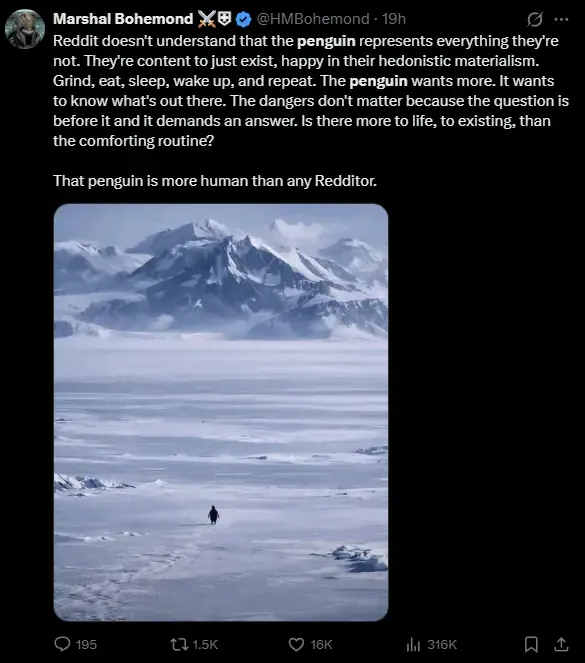
Despite the jokes and memes, the “Despairing Penguin” has become more than just a viral clip—it is a symbol of modern life itself: a silent struggle, a quiet search for peace, and the feeling of walking alone through life’s challenges.
One penguin, a single journey, and millions of hearts touched.