
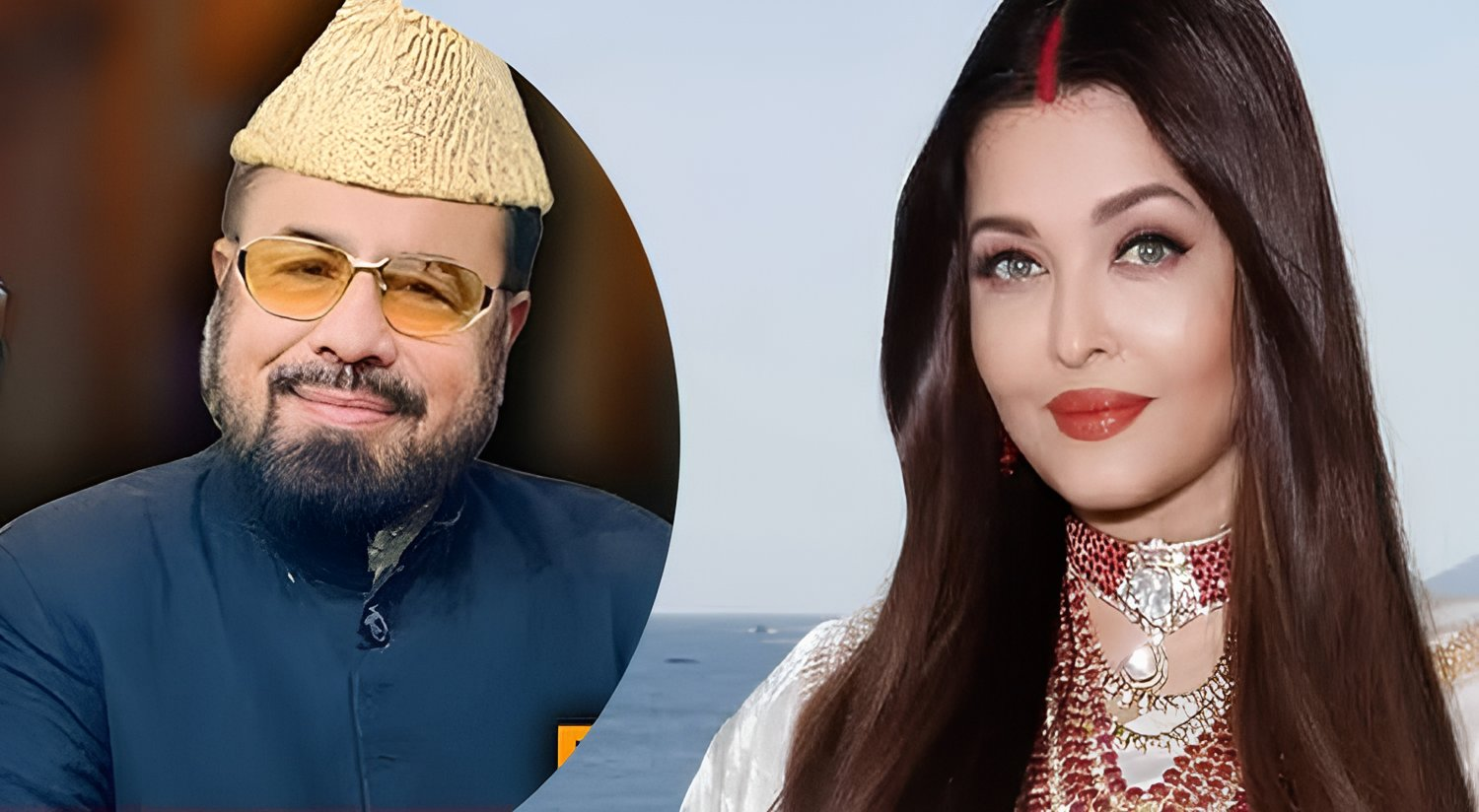
You can love him or hate him, but Mufti Abdul Qavi is more famous for controversies than religious work. Though he carries the title “Mufti,” his credibility as a scholar is widely questioned. His public life has been dominated by scandals, disputes with showbiz personalities, and social media controversies, rather than any significant religious contributions.
— Claim About Aishwarya Rai
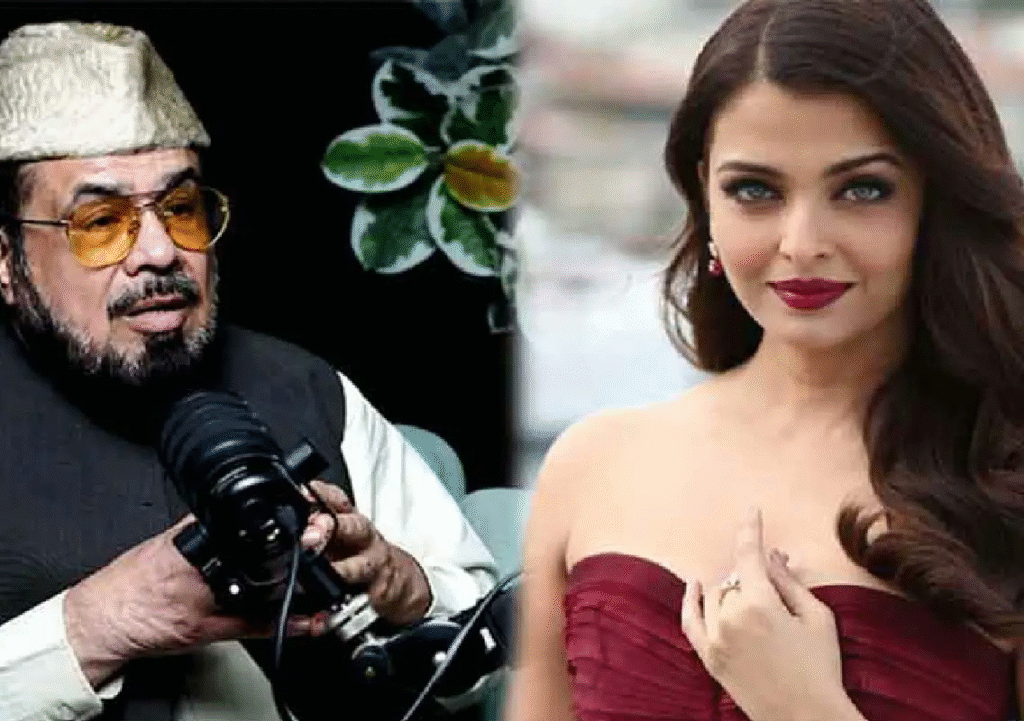
In November 2025, Mufti Qavi claimed that if Bollywood star Aishwarya Rai divorced her husband, she might propose marriage to him after converting to Islam. He said he would rename her “Ayesha Rai” following conversion.The claim sparked massive social media backlash, with critics condemning the mixing of celebrity gossip and religious identity.
— Proposal to Rakhi Sawan
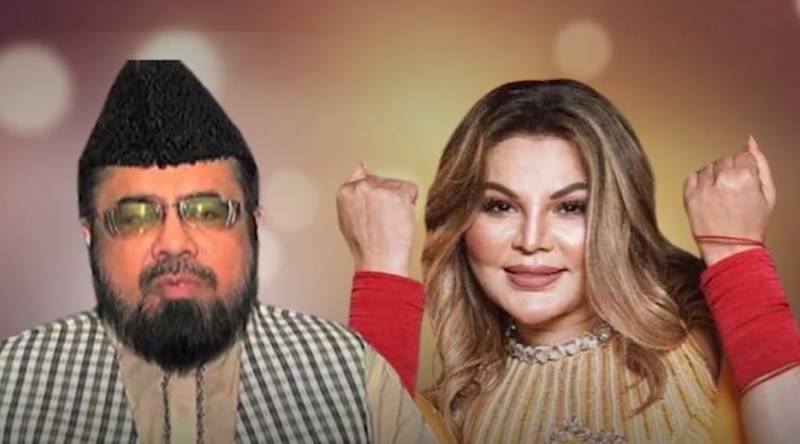
In February 2025, Qavi publicly expressed his willingness to marry Rakhi Sawant, with approval from his mother.He announced a tentative “nikkah date” of 14 February (Valentine’s Day), claiming she was interested. A Pakistani landlord offered Rakhi land worth millions and luxury gifts to accept the proposal.Rakhi Sawant rejected the proposal, publicly stating that she wasn’t serious and joking that he “would not be able to handle” her.
— Qandeel Baloch Scandal
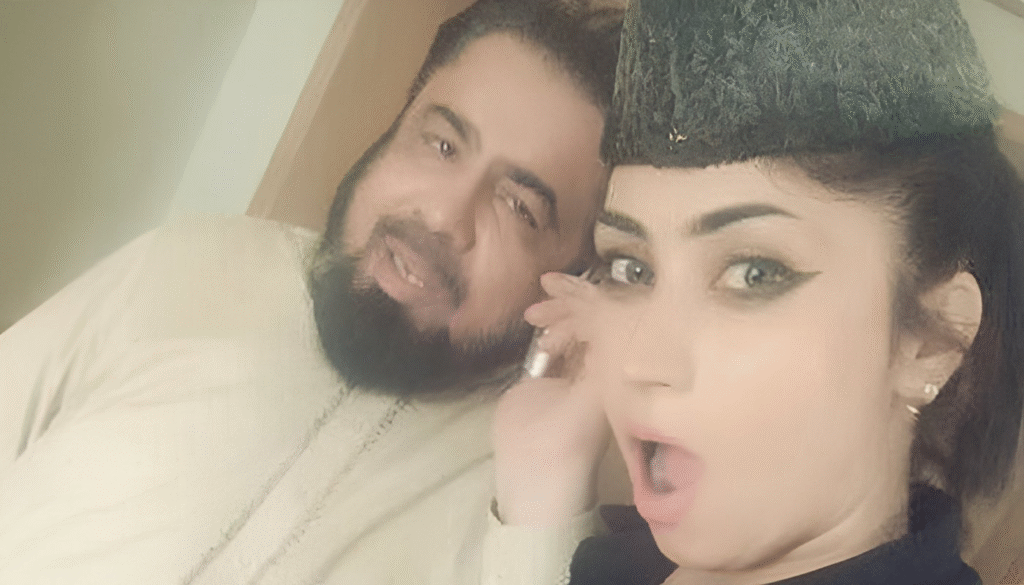
In June 2016, selfies and videos of Qavi with social media star Qandeel Baloch went viral. The incident caused public outrage, questioning his moral integrity as a religious figure. Following the scandal, he was suspended from the Ruet-e-Hilal Committee and other official religious bodies.The controversy intensified after Qandeel Baloch’s murder later that year, and Qavi was questioned by police during the initial inquiry.
— Hareem Shah Allegations
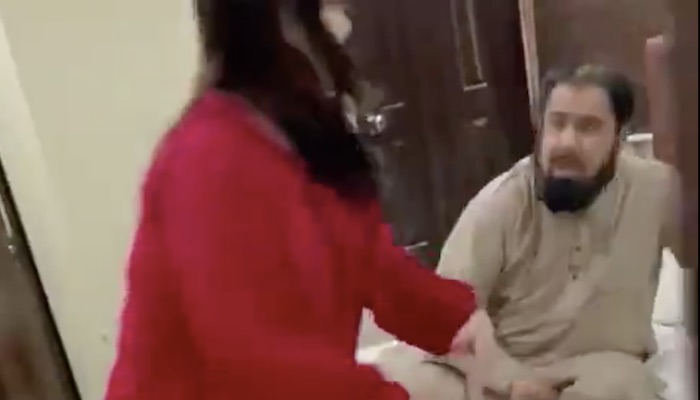
A viral video showed TikTok influencer Hareem Shah slapping Qavi, accusing him of making inappropriate remarks. His family temporarily revoked his title “Mufti”, citing damage to their reputation. Reports also mentioned that he sought mental health treatment following the scandal.
— Hard Talk With Veena Malik
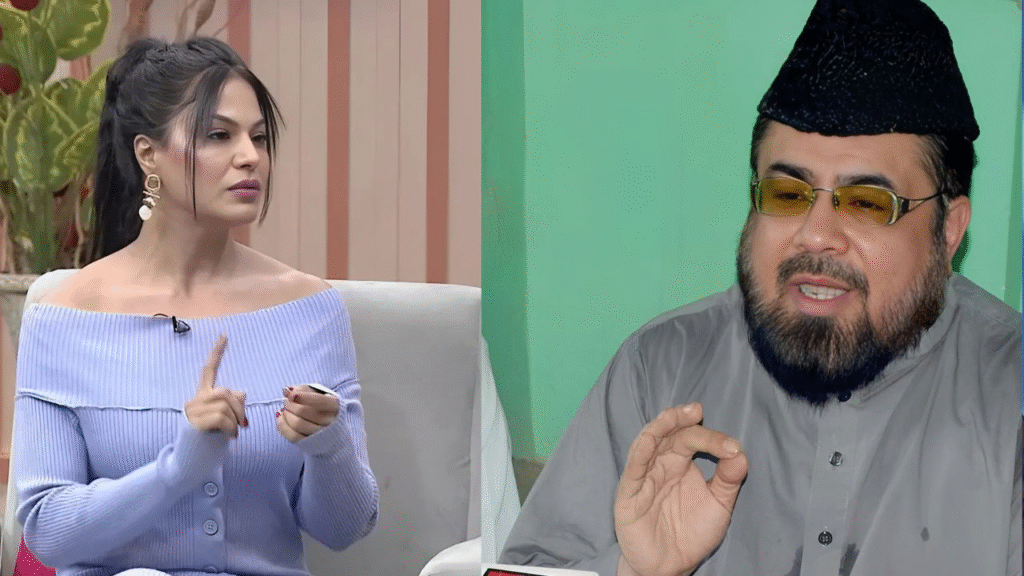
Veena Malik and Mufti Qavi are back in the spotlight over a long-running feud. The Mufti condemned Malik’s Bigg Boss stint as “immoral” and an “affront to Pakistanihood,” criticizing her attire and on-screen behavior. Malik defended herself on a TV talk show, saying she represents herself as an entertainer—not the nation—and called out double standards and bigger societal issues ignored by the clergy.
During the heated debate, Qavi admitted he hadn’t even watched the show—he judged based on hearsay, a point Malik used to challenge him.The dispute resurfaced in 2024 when Malik alleged that Qavi made intrusive private remarks about her appearance, highlighting the ongoing clash between conservative religious values and liberal entertainment culture in Pakistan .
Qavi has repeatedly made provocative public statements on social media and TV shows, drawing criticism from scholars and the public. Viral clips showing him in flirtatious or compromising situations have reinforced his image as a celebrity figure rather than a religious leader.
Impact on Religious Credibility
Suspension from religious committees and family revocation of his title demonstrate that Qavi’s behavior is considered unacceptable even among formal religious institutions. Social media controversies, celebrity interactions, and sensational claims have overshadowed his religious authority, reducing him to tabloid fame.These incidents highlight the risk of conflating religious identity with public spectacle, especially in the age of social media.
Conclusion
Mufti Abdul Qavi’s journey underscores a harsh reality: he knows how to remain in the limelight, but nobody takes him seriously. From selfies with Qandeel Baloch to proposals to Rakhi Sawant, from Hareem Shah allegations to sensational claims about Aishwarya Rai, his story shows that he has no real credibility — just spice for social media. In today’s media-driven world, fame often overshadows substance, and Qavi’s case is a prime example.