
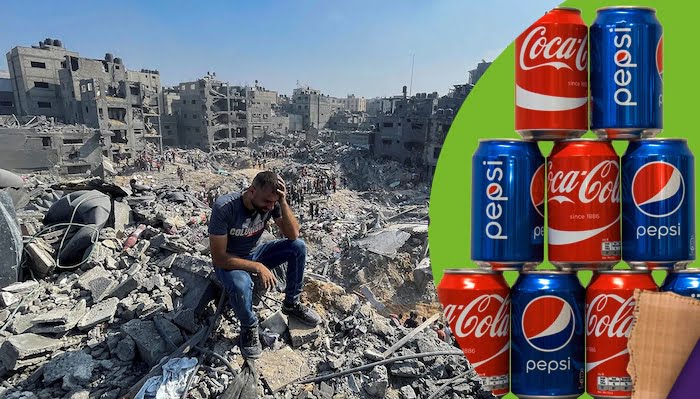
Since the Gaza conflict began in October, over 12 multinational companies supporting Israel have faced widespread consumer boycotts, resulting in reduced sales, layoffs, and significant reputational damage, according to TIME.
This backlash has created opportunities for new brands to fill the gap left by these major corporations.
Coca-Cola and PepsiCo are particularly struggling in Muslim-majority countries, where consumer boycotts have targeted them as symbols of American and Israeli interests. Despite recent growth in these markets, they now face significant challenges.
Emergence of New Brands Amid Boycotts
New brands such as V7, Cola Next, Gourmet Cola, Gaza Cola, and Palestine Cola have emerged to capitalize on the current sentiment shift. These brands benefit from the public’s strong reactions to the boycott.
Brayden King, a boycott expert at Northwestern University’s Kellogg School of Management, noted to TIME that while most boycotts have limited long-term impact on consumer behavior, those that do succeed often leverage public scrutiny. “People hold each other accountable,” he explains, particularly with products that are integral to social settings like food and drink.
Egypt
In Egypt, Coca-Cola’s sales have sharply declined, while the local brand V7 has tripled its cola exports in the region. Pepsi has also seen its growth stall since the conflict began.
Pakistan
In Pakistan, Sunbal Hassan opted for Cola Next over Coke and Pepsi at her wedding to avoid supporting U.S. interests. Local brands like Cola Next and Pakola have surged to 12% of the soft drink market, up from 2.5% before the boycott.
Coca-Cola’s market share fell to 5.7% from 6.3% in 2022, and Pepsi’s dropped to 10.4% from 10.8%. Cola Next’s new ad slogan, “Because Cola Next is Pakistani,” highlights its local identity. Anti-Coca-Cola sentiment has hurt goodwill, affecting sponsorships such as Coke Studio. Coca-Cola recently invested $22 million in technology upgrades in Pakistan, while PepsiCo reintroduced Teem soda with a local label.
Middle East
Across the Middle East, Western beverage brands experienced a 7% sales decline in early 2024. Despite these difficulties, Coca-Cola and PepsiCo continue investing in the region. Georgetown University’s Paul Musgrave cautions that breaking consumer habits could cause long-term damage to brand loyalty. Both companies are actively supporting local communities to maintain their market presence.
Bangladesh
In Bangladesh, Coca-Cola faced backlash after an ad featured a shopkeeper discussing the company’s operations in Palestine. Following public outcry, Coca-Cola pulled the ad in June and apologized, acknowledging the campaign “missed the mark.” Other American brands, including McDonald’s and Starbucks, also face anti-Israel boycotts in the region.
Other Markets
Cola Gaza debuted in the British market this month, while Palestine Drinks, a Sweden-based company, started trading in March and now serves the EU, UK, and South Africa.
Mohamed Kiswani, communications director for Safad Food, the Palestinian-owned parent company of Palestine Drinks, told TIME that the beverage has exceeded expectations, with nearly 16 million cans sold in the past five months. Revenue from these sales supports organizations aiding Palestinian civil society in the West Bank and Gaza.